We Only Hustle to Flip Untill We Never Have to Make a Trip Again
Quit your task to travel the world -- it'due south a reality for some and a piping dream for others. And still others flip the platitude on its head to turn travel -- or the business of travel -- into their jobs.
Click through to run across seven entrepreneurs who successfully started their ain travel companies, from a college grad who built a business organization out of emailing flying deals to his friends to a healthcare industry veteran using information science to revolutionize travel planning. They share how they got started, how they fabricated money and what they wish they'd known at the beginning.
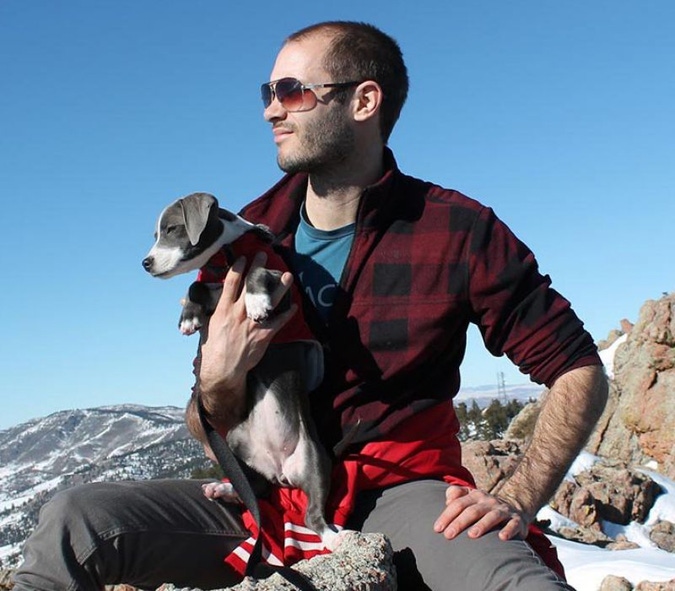 Scott'due south Cheap Flights
 Scott Keyes, founder of Scott's Inexpensive Flights
What his company does: Scott's Cheap Flights is an electronic mail newsletter with both free and paid subscription options. Information technology alerts subscribers to cheap flight deals in real time and has saved people more than than $1,000,000 on travel to date.
How he got his start: "Necessity is the mother of invention," Keyes says. Equally a contempo college graduate working in journalism, he didn't take a lot of money, but he wanted to travel. To make information technology happen, Keyes started immersing himself in guides, video tutorials and message boards on everything from credit card points to cheap flight hacks. It paid off in 2013 when Keyes found the all-time bargain of his life: a nonstop round-trip flight from New York City to Milan for just $130. He remembers his palms sweating and his easily shaking, but he booked the trip earlier the deal disappeared -- then jetted off to explore Milan, ski the Alps and visit Lake Como. Upon his render, Keyes was overwhelmed with colleagues request him if they could let them in on the next deal he found, so he started an electronic mail list to proceed his friends informed.
For the get-go xviii months, it wasn't a business concern at all, "simply a hobby that I did for fun in my gratis fourth dimension," Keyes says. By summer 2015, that email list had grown large enough that Keyes would need to start paying to send information technology out via MailChimp. The high level of interest prompted him to gauge how many people would be willing to shell out a couple of bucks for the service. His initial goal was simply to pause even on the e-mail-sending cost: Get 25 people to pay $2 a month.
How he turned a turn a profit: The idea of convincing people to pay for something they're used to getting for free concerned Keyes, so he ready an extremely low price indicate at first with $2 a month. The first week was touch-and-go, only subsequently a few weeks, he had made $100. Later a few months, he and his co-founder realized that on $2 a month, "credit card fees are eating you lot alive," Keyes says. At a standard 3 per centum plus xxx cents per transaction, bill of fare companies were earning double-digit percentages on every transaction. They graduated to a longer-term subscription model to save on fees: $15 for three months, $25 for 6 months or $39 for one twelvemonth.
His secret to success: "In that location's a piddling bit of an illusion or a story we like to tell ourselves -- that as shortly as we go things up to a certain point, then nosotros tin can terminate working every bit hard," Keyes says. Although that might be truthful for passive income such as ongoing book sales, it's non truthful for business. "The more than it grows, the bigger information technology gets, more than people are relying on yous," Keyes says. Information technology'due south important to make sure you're passionate virtually what you're building.
What he wishes he'd known: Don't quit your mean solar day chore also presently and also early. There's "existent romanticism about the tireless entrepreneur who quits their task and liquidates their bank business relationship" considering they worked and so hard at their dream, Keyes says -- but y'all don't hear equally much about the startups that don't work out. He kept in mind the thought that most startups fail in gild to stay apprehensive and to remind himself to be smart financially. It wasn't until half-dozen months after Keyes made his commencement dollar that he stopped taking on freelance writing projects, and although he knew he'd never feel 100 percent ready, he advises gathering enough evidence that there's a market for your product or service before jumping in with both feet.
Top consumer tip: Keyes says ane bottom-known tool is the fact that if you book a flight directly with an airline, you're entitled past law to a 24-hour no-fee cancellation menstruation (unless the flying departs inside a week). If you find a great deal, you tin buy the flight, lock in the price for yourself and then decide whether to keep it. "In full general, the ameliorate the toll is, the shorter [the time] it's going to last," Keyes says.
Related: ten Ways to Travel the World Without Breaking the Bank
 The Points Guy | Facebook
 Brian Kelly, founder and CEO of The Points Guy
What his company does: The Points Guy is a travel website covering travel and rewards tips, reviews and more. The site publishes pieces ranging from how to maximize your credit card points to travel guides for unlike areas.
How he got his kickoff: Kelly'due south male parent was a consultant, and work required he travel frequently while his son was growing up. They frequently bonded over using the miles he stacked up to book family vacations, which sparked Kelly's love of points and their ensuing travel possibilities. Afterward graduating, he snagged a task at Morgan Stanley traveling half the year for recruiting -- meaning he raked in hotel and airline points, earning elite condition. Soon afterward, the fiscal crisis hit, and although Kelly wasn't laid off, he saw the window for growth opportunities disappearing. But some other business concern idea was brewing. Co-workers often came to his cubicle for help planning trips.
"I was known every bit 'The Points Guy' at piece of work," Kelly says. The first incarnation of his business organization program was more than "travel agency" -- people would pay Kelly $50 to help them make the about of their points -- but it wasn't scaleable. Later on friends' suggestions, he bought a blog domain with hopes of making some money on the side. In June 2010, a co-worker'south programmer husband showed Kelly the Wordpress ropes, set up his site and told him to weblog consistently every twenty-four hours. "I didn't know what Wordpress or SEO was," Kelly says. "[This] was never in the realm of possibility when I started out."
How he turned a profit: Kelly balked at putting ads on his site at outset considering he didn't want to sacrifice quality on his passion project. He finally caved after a friend's urging, then began making $100 or $200 a month. Merely the real turning point came after the site hitting twenty,000 readers in February 2011. Chase Bank expressed interested in working with Kelly as an chapter, offering him the chance to make $150 for every Chase credit card a reader signed up for via one of Kelly's links. He fabricated $5,000 the first month.
Momentum spiked in April 2011, when a feature slice on The Points Guy in The New York Times coincided with one of Kelly'south credit carte du jour blog posts going viral -- leading to $100,000 in profits that month and him quitting his day job. Kelly later sold the site to Bankrate, which was then purchased past Red Ventures, a company that combines data science with brand marketing. Kelly maintains creative control of the site, and since the sale, The Points Guy has redesigned its app and made changes to how it serves upwards content.
His cloak-and-dagger to success: Kelly says that harnessing the power of social media was what set him apart from the other older blogs focusing on the same topic. It's important to be flexible, and you'll need to evolve with the times and seek out potential in platforms that might not accept withal defenseless on. "You never desire to be completely reliant on one platform," Kelly says, who recently put The Points Guy on Flipboard, a news and social network aggregator.
What he wishes he'd known: Kelly was hesitant to hire at offset, so he brought people on to perform multiple roles each. Simply people don't often perform as well at multiple jobs equally they practise at just one -- even worse, it can atomic number 82 to exhaustion or set employees upward for failure. Skillful people management -- and hiring the right people -- is vital to success, Kelly says. "I was in recruiting and came from Hour earlier this, but some of the biggest mistakes I take responsibleness for are hiring the wrong people in the wrong roles."
Peak consumer tip: Consumers looking to make the nigh of their points should know that "they're not frequent flier programs anymore -- they're frequent spender programs," Kelly says. In order to exist smart with points, you lot've got to be smart with your finances -- so it'southward important to piece of work on your credit score and pay off whatsoever credit menu debt before embarking on a goal such as racking up travel rewards. If you're not paying off cards in full every month, the interest y'all'll accrue will substantially cheapen whatever rewards you earn. "Understand where you spend your coin, and and so marshal your spend with the correct credit card or credit cards," Kelly says.
 Grace Lee | Twitter
 Grace Lee, founder and CEO of WishPoints
What her visitor does: WishPoints is an app that allows users to record their travel wishes, share where they'd like to get with friends and friction match upward with travelers with similar interests. Airline and hotel companies bid to win users' business concern by offering discounts for significant numbers of travelers.
How she got her starting time: Lee's ii-decade career in the healthcare industry involved her working with predictive analytics -- and traveling to 85 countries around the world. She'd tack on extra days and trips to every business trip to make the almost of her gratuitous flights. But the biggest headache for Lee was coordinating plans with friends: figuring out where they wanted to become and what they wanted to exercise. She realized she'd identified a larger issue in the industry that her data aggregation background could assistance solve.
While still working at her twenty-four hour period job, Lee attended a startup weekend contest in 2012 and pitched her idea, which concluded up snagging the highest rating of the event. She worked on the side hustle off and on for a few years, then decided to pursue WishPoints full-time in 2016. Since then, the app has garnered more than three million users.
How she turned a turn a profit: Lee is still working on maximizing profits, but her business model is articulate: Use user information to assemble travel discounts. If 500 users want to visit Iceland, for example, she'll take airlines, hotels and travel companies bid to win their collective business -- and those bids as well mean consumer savings. For case, if one airline bids a 30 percent off deal for users and the other bids forty percent, the latter will win that entire cake of business, and each user will be entitled to those savings.
Her secret to success: In that location will always be new obstacles that pop upwards to tedious your progress, Lee says, whether from work, social life or finances. Chipping away at a goal a little at a time can exist the most effective fashion to see real growth. "You don't demand to practise everything in one mean solar day," she says. "You tin do a little fleck each day, and the momentum somewhen will take hold of up similar a snowball."
What she wishes she'd known: Launching a business is a mental claiming similar to running a marathon. "Every day, y'all question yourself and ask whether this was the right decision -- to go out a 20-year career to pursue something that's uncertain," Lee says. You can plough that uncertainty into mental forcefulness past training yourself to look ahead -- into the future of what y'all're building -- and pull yourself back up afterwards any setback.
Top consumer tip: For consumers looking for hot travel destinations this year, Lee recommends Colombia and Jordan. In the latter, travelers can visit the Dead Body of water, the Red Sea, Roman ruins and more than. "You feel similar you're on Mars [or] in Indiana Jones," she says.
Related: Why Travel Should Be a Top Priority for Every Entrepreneur
 Black Tomato Travel | Instagram
 Tom Marchant, co-founder of Blackness Tomato
What his company does: Black Love apple is a travel company planning and tailoring trips for its clients with an emphasis on unique experiences.
How he got his commencement: Marchant met his two business concern partners while at Newcastle University in northeast England. They shared the dream of building a business, so they decided that ane day, they'd do it together. Travel was the primary passion they had in common. Marchant and one of his time to come partners traveled through South America post-graduation and visited an area of Brazil with all-encompassing swampland and jungle. A solar day they spent catching fish and grilling information technology by a lake helped them strop their business organisation purpose -- they wanted to transport customers to unique destinations and offer authentic local experiences they couldn't discover in guidebooks or formulaic itineraries.
"We desire people to feel like travelers, not tourists," Marchant says. Coincidentally, Marchant and his friend ended up coming together another of their future partners on their South America trip. "Nosotros said, 'Nosotros never want to stop doing this. How can we plow it into a company?'' Marchant says.
How he turned a profit: The friends started Blackness Tomato in Marchant's bedroom. They knew they needed both a great website with a consistent message and contacts effectually the world, so they set to work building up both -- merely they did take hold of a couple of lucky breaks upfront. When Marchant needed help writing copy for the site, he sent a "cold e-mail" to someone at Condé Nast, and he received a answer requesting more than information on Black Love apple.
Marchant met someone from the company for coffee two weeks later on, and two months after that, Condé Nast Traveler published a full-page feature on Black Tomato calling the company the "future of travel." Marchant says that put Black Lycopersicon esculentum on the map in the United Kingdom and the international market place. Another early on perk? The fact that the company required greenbacks deposits upfront helped with liquidity early on. Discussion of mouth was its biggest nugget when it came to growth, amplified by a few more press features.
His underground to success: Marchant and his ii co-founders didn't come up from a travel background, which he views equally both a challenge and a approving. It fostered creativity in the services they created, and they began to offer pre- and post-trip services equally well as travel packages. They focused on what they thought was missing in the travel space and, coming at it from an exterior view, what they'd desire equally customers. That idea fueled their business plan.
What he wishes he'd known: "Nosotros were aggressive and passionate, simply certainly in the early days, it'southward like shooting fish in a barrel to take a few knocks," Marchant says. He wishes he could tell his younger self not to stress as much and trust in his goal. Tenacity pays off, and persistence gets you results.
Peak consumer tip: Consider traveling during "shoulder seasons" -- or times of year simply earlier or after peak season in any destination. Traveling during a shoulder season ofttimes means fewer crowds and ameliorate deals without sacrificing good weather. Marchant also suggests making it a point to talk to as many people equally you can while traveling, instead of meticulously planning an itinerary from online research. Some of the all-time experiences and insights come from talking to locals, pinning downwards the passions y'all have in common and seeing parts of the globe you never would take seen otherwise.
 Intrepid Travel
 Darrell Wade, co-founder of Intrepid Travel
What his company does: Intrepid Travel is a small group chance travel company operating with itineraries in more than 120 countries. Its mission is to give travelers both a guided and genuine cultural feel by traveling, eating and sleeping the way locals do. How he got his outset: Wade's commencement time on a plane landed him in Hawaii when he was 6-years-former, and he yet remembers it vividly. Fast-forwards to mail service-graduation, and within five or six weeks of starting a task, Wade realized he was a "terrible employee" in that he couldn't discover any sort of passion for someone else's business. Both his parents were entrepreneurs, so the gene was "embedded pretty deep in [him]," he says. One night in 1998 -- while tossing ideas back and forth with a friend over a bottle of wine -- Wade realized he wanted to enter into the concern of travel.
In the 1980s, Wade had backpacked for months on end, and he valued the way backpackers were immersed in local culture -- taking trains, buses and even donkey carts every bit transportation, or staying in accommodations such every bit conventional hotels, overnight trains, hostels or national park lodges. He wanted to give people that same caste of cultural experience in a more than organized fashion. The idea evolved into Intrepid.
How he turned a profit: "Although nosotros'd both been to business concern school, I think we mustn't take been listening," Wade says. He says his and his co-founder's number one error was not securing plenty cash to beginning the business, so they were constrained on capital for the first couple of years. "Under the hood in any given trip, there could exist every bit many equally i,000 line items of costs," Wade says, citing everything from java to transportation to activities to fees and permits.
Luckily, the very nature of Intrepid'southward business plan -- greenbacks deposits upfront for the promise of a unique travel experience later -- meant they had enough money in the banking company to operate. Wade and his co-founder didn't make plenty to pay themselves until year three, but since then, growth and lower operating costs in developing countries has brought them a relatively healthy profit margin.
His hugger-mugger to success: Wade attributes his success to ane key element: the realization that he and his co-founder "weren't actually that smashing at anything." Early on, they knew they needed to rent the correct employees -- people who were extremely talented and skilled -- as fast every bit they perchance could. "I don't have to work every bit hard, and we're getting much ameliorate output because they're much more than talented than I am," Wade says.
What he wishes he'd known: Trial and fault is a valuable procedure, and it's why Wade says he wouldn't give his younger cocky whatever additional insights. Failure is widely seen as one of the all-time teachers, especially when information technology comes to business. "I retrieve it'due south far better just to battle through," he says. "You usually learn a hell of a lot more through failure than y'all do through success."
Height consumer tip: Travelers shouldn't exist so timid when weighing potential risks or questions nearly future travel, Wade says -- he recommends taking the leap and never looking back. "Get out of that resort," he says. "Become out and see the real globe, and learn a bit and have a flake of fun along the style."
Related: How He Went from Intern to Innovator in the Travel Industry
 Paul Metselaar
 Paul Metselaar, chairman and CEO of Ovation Travel Group
What his company does: Ovation Travel Group is a high-end travel company that specializes in both corporate travel and leisure vacations, completing upwards of $1 billion in travel bookings per year. "I like to call what we do 'prima donna travel,'" says Metselaar, likening it to the "care and feeding of" lawyers, investment bankers, hedge fund managers, entertainment executives and celebrities. (For case: The company recently arranged a wedding in Morocco, flying in both Dave Matthews Band and Coldplay. "I recall the family unit spent $2 million just on bands," Metselaar says.)
How he got his start: For close to seven decades, Metselaar's family has been in the travel business -- his father, a instructor in the Bronx, had a business taking teens on guided tours across the world. When Metselaar tagged along on i of the Europe tours equally a kid, he was bored -- he read The Lord of the Rings comprehend to cover and wished he was dwelling playing basketball or football with friends. But the experience planted seeds, and afterwards on, Metselaar grew to dear travel, seeing information technology every bit a "mind expander" and a mode to sympathize other cultures. So afterwards, when his father needed help running a struggling travel agency he'd bought, a 27-yr-sometime Metselaar left his law practice and took over the agency, turning into a company called "Lawyers Travel" that helped adapt excellent trips for litigators. Subsequently, he expanded the visitor's focus to include all types of corporate travel and leisure vacations.
How he turned a turn a profit: Metselaar points to capitalizing on niche markets, hiring a quality and diverse team and sticking to his morals equally vital to Ovation Travel Group'southward growth. "A lot of people will attempt to become you to do things you lot shouldn't, so always take the correct ethics and morals -- and run your business like you lot do your personal life," he says. He also emphasizes the importance of delegating and giving those y'all hire the liberty to do their jobs.
His hole-and-corner to success: Every day, Metselaar says, his father told him to keep his door open because "you never know who might walk through." Through tragedies that turned the travel industry upside down -- the Gulf Wars, 9/11, SARS and more -- Metselaar says persistence was the driving force backside his team emerging, mail service-crisis, as a stronger company. "I recall that persistence is a very underrated quality," he says. "Some entrepreneurs give up besides before long. … [I] had to juggle credit cards to make payroll in the early years."
What he wishes he'd known: "That it was all going to work out OK," Metselaar says. He spent a considerable amount of time facing fearfulness he'd fail, disappoint his family and be forced to get back to practicing law. On the other hand, he says, fear is a not bad motivator, and then he wonders if he'd take been as motivated without that trepidation driving him.
Top consumer tip: Don't plan everything, and don't always travel with your friends -- instead, "organize your trip to encourage serendipity," Metselaar says. Engineer your plans to let for time to explore, walk around frantically, talk to people and come across where those conversations lead. He says he wishes more than Americans traveled because experiencing other cultures leads to realizing that across the earth, humans are much more than alike than they are different. "Everybody has the same hopes and dreams all over the world," he says.
 HotelTonight
 Sam Shank, co-founder and CEO of HotelTonight
What his company does: HotelTonight aims to change the hotel-booking game for the mobile era, emphasizing final-minute discounts for hotel stays. (Despite the name, the service has recently expanded to allow users to book upward to 100 days in advance.) Savings average almost xx percentage compared to booking through an online travel agency, Shank says.
How he got his showtime: Shank says the "travel bug" bit him just earlier business school, when he tagged forth on a pre-orientation trip to Republic of costa rica. It was the starting time time he'd ever gone on a trip incorporating both adventure and civilisation immersion, and Shank was immediately hooked. "I said, 'This is amazing. I want to do more and more of this. How can I do more than of this?'" he says. Afterward graduating concern school, he got started with only that -- launching another travel visitor more geared towards social networking before eventually landing on the idea for HotelTonight.
How he turned a profit: "When we decided to focus on profitability, the nearly of import affair was aligning the team [that] no other priority mattered," Shank says. "It was one of the highlights of my career … seeing how well the team came together around this singular goal." HotelTonight employees began brainstorming strategies for launching the company into the green, and higher-ups were transparent with the numbers. One of the offset orders of business concern: Doing away with discounts and coupons. Shank figured the value proffer was already unique and would stand up on its own. The ensuing revenue seemed to prove him right. Next up was doubling down on innovation for hotels using the platform -- and introducing "Geo Rates," where hotels could honour discounts to users in certain parts of the world to encourage a more varied customer base of operations.
His secret to success: Shank emphasizes the importance of focusing on the client. For his part, HotelTonight has two sets of customers -- consumers and hotels -- and then that makes information technology "doubly hard just also doubly important," he says. He likewise recommends narrowing your focus to i or two niche areas rather than trying to tackle five or six aspects of your manufacture or metrics at the same fourth dimension.
What he wishes he'd known: Growth and profitability are not mutually exclusive, Shank says. When he launched HotelTonight, he wishes he'd known that growing the "topline" is key, just watching the bottom line simultaneously is simply as vital.
Tiptop consumer tip: Hotel rates work in the exact opposite style that flight prices do, Shank says. For the latter, the more y'all drag your heels to book a trip, the more you tend to shell out, but when it comes to hotels, more competition ways that rates can drop exponentially the longer you wait. "Wait as long as you experience comfortable," says Shank, who will take his own advice for his family trip to Europe this summer.
Source: https://www.entrepreneur.com/slideshow/311713
0 Response to "We Only Hustle to Flip Untill We Never Have to Make a Trip Again"
Publicar un comentario